VISTO MOULDINGS FLOORING ADVICE
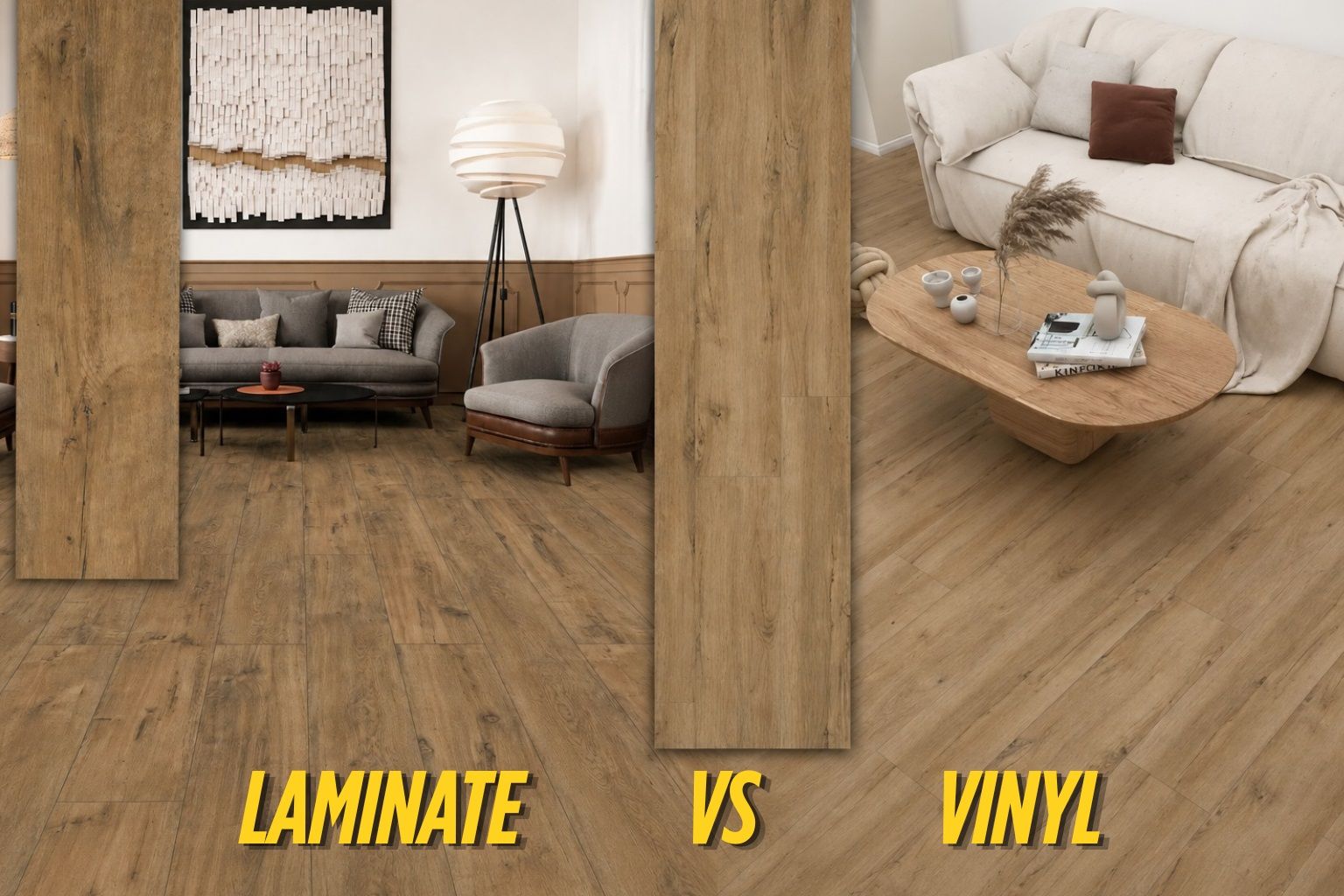
Vinyl Click Flooring vs Laminate Flooring
What more than 20 years in the flooring industry have taught us
A practical comparison based on real installations, callbacks and customer experience
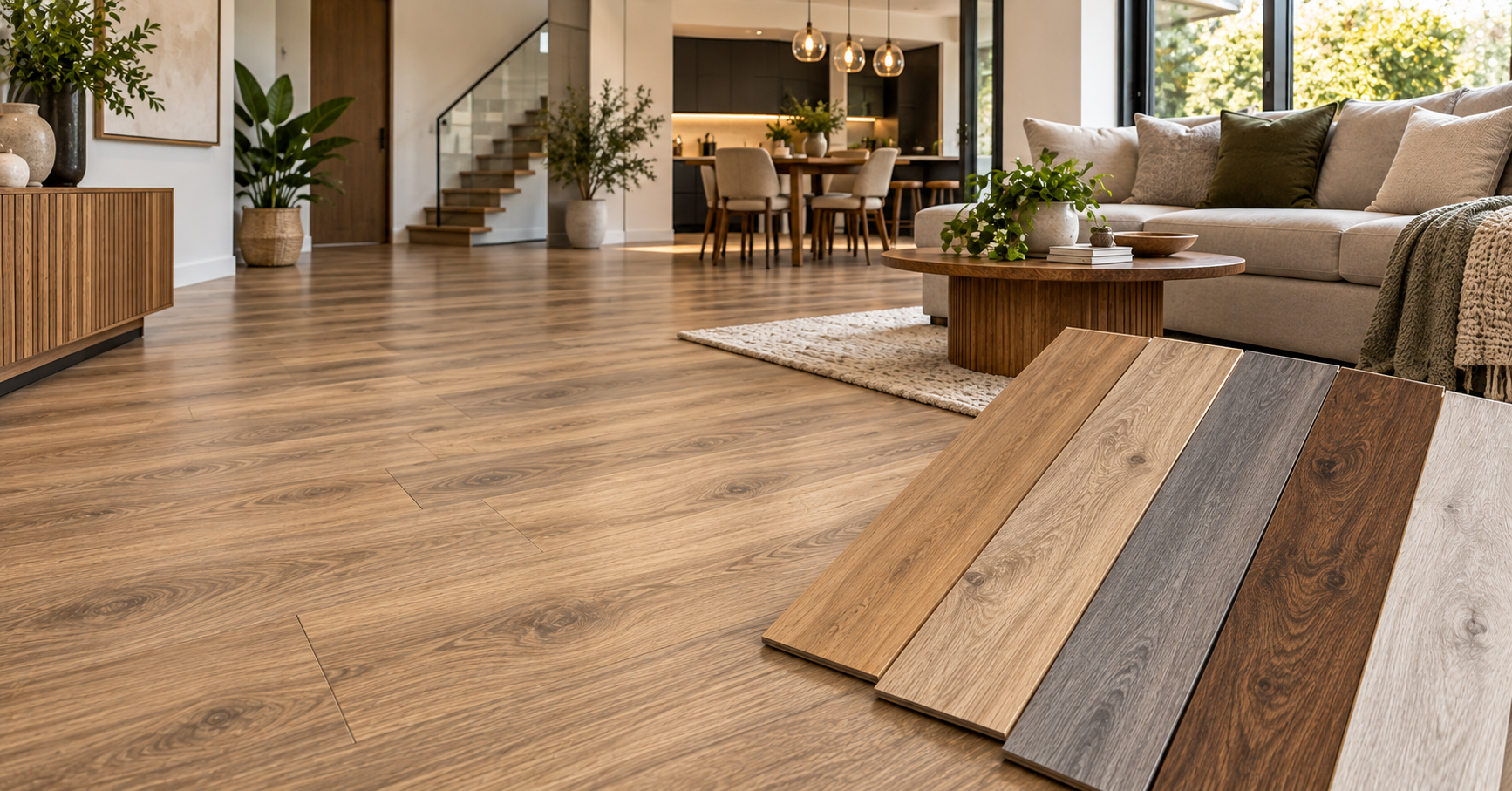
Our view in one sentence: For most living areas, a good-quality laminate floor often offers the better combination of hardness, appearance and value. Vinyl click flooring can still be the right choice, especially where water tolerance matters, but only when the product, subfloor and installation are all right.
A practical view, not a laboratory comparison
At Visto Mouldings, we have been involved in the flooring industry for more than 20 years. Laminate flooring has been part of that market throughout, while rigid click vinyl - particularly SPC flooring - became prominent in South Africa much later. During that time, we have worked with both products and have seen what performs well, what causes problems and what can turn into an expensive callback.
This article is not an attempt to say that every vinyl floor is bad or that every laminate floor is good. Product quality varies enormously. Our purpose is to explain the practical differences customers do not always hear at the point of sale, so that the floor is selected for the room, the subfloor and the way the home will actually be used.
Important distinction: This comparison focuses on rigid vinyl click flooring, commonly called SPC. Glue-down vinyl is a different system and has different installation requirements.
Why vinyl click flooring became so popular
Around 2010 to 2011, we began seeing SPC and other click vinyl products enter the South African residential market in a much bigger way. They were first promoted heavily for kitchens and bathrooms, then moved into lounges, passages and bedrooms. The appeal was understandable: realistic designs, a slim profile, easy cleaning, a quieter and slightly softer feel underfoot, and the promise of a floor that was 'waterproof'.
The word 'waterproof', however, needs to be understood correctly. The vinyl plank itself does not absorb water in the same way as the wood-fibre core of ordinary laminate. That does not automatically make the complete room or flooring installation waterproof.
A waterproof plank does not make a waterproof room
Water can still move through perimeter gaps, transitions or damaged joints and become trapped underneath a floating vinyl floor. It can affect screeds, timber subfloors, skirtings, walls and adjoining rooms, and trapped moisture can create odour or mould problems even when the plank itself does not swell. A plumbing leak or flood is also very different from an everyday spill that is cleaned up promptly.
Over the years, we have seen water and moisture incidents where vinyl planks lifted, buckled, separated or had to be removed. This is why customers should read the exact manufacturer's warranty rather than relying only on the word 'waterproof' on a display board. The warranty may cover the product under specific conditions without covering damage below the floor, poor installation, flooding or the cost of removing and reinstalling the floor.
The subfloor is often the deciding factor
Every floating floor needs a subfloor that is clean, dry, stable and sufficiently flat. With rigid click vinyl, this becomes especially important. If the floor bridges a hollow or rocks over a high spot, normal foot traffic repeatedly flexes the joints. Over time, that movement can stress or break the locking system. What first appears to be one loose plank can become a wider click failure, and the practical remedy may be to lift a large section of the floor or replace it.
In our experience, a good laminate system can sometimes be more forgiving of small imperfections than a thinner click vinyl product. That does not mean laminate can be installed over a poor base. Both products require proper assessment, moisture testing and preparation, and the installer's idea of 'level enough' must match the tolerance in the selected manufacturer's instructions.
Heat, sunlight, furniture and pets
Strong direct sunlight can create high surface temperatures, particularly behind large windows and sliding doors. With some vinyl click products, this can contribute to thermal movement, gapping, buckling, discolouration or damage to the locking joints. Correct expansion gaps, suitable window coverings and compliance with the product's temperature limits are therefore important.
We have also seen vinyl surfaces marked or scratched by heavy furniture, dragged objects, grit and household dogs. This does not mean every vinyl floor is soft or easily damaged. It does mean that the quality of the wear layer and coating matters, and that claims such as 'pet-proof' or 'scratch-proof' should be read together with the exclusions in the warranty. Felt pads, protective cups and sensible maintenance remain necessary on both vinyl and laminate floors.
Where vinyl click flooring can make sense
Vinyl click flooring has genuine strengths. It can be a good option where everyday spills are more likely, where a slightly warmer and quieter feel is preferred, or where a lower floor build-up is useful during a renovation. A quality product, installed on a properly prepared base and used in an area approved by the manufacturer, can perform very well.
The mistake is choosing it on the strength of one word - 'waterproof' - without checking the flatness of the subfloor, moisture below the floor, direct sunlight, expansion requirements, furniture loads and warranty conditions.
Why we often favour laminate for living areas
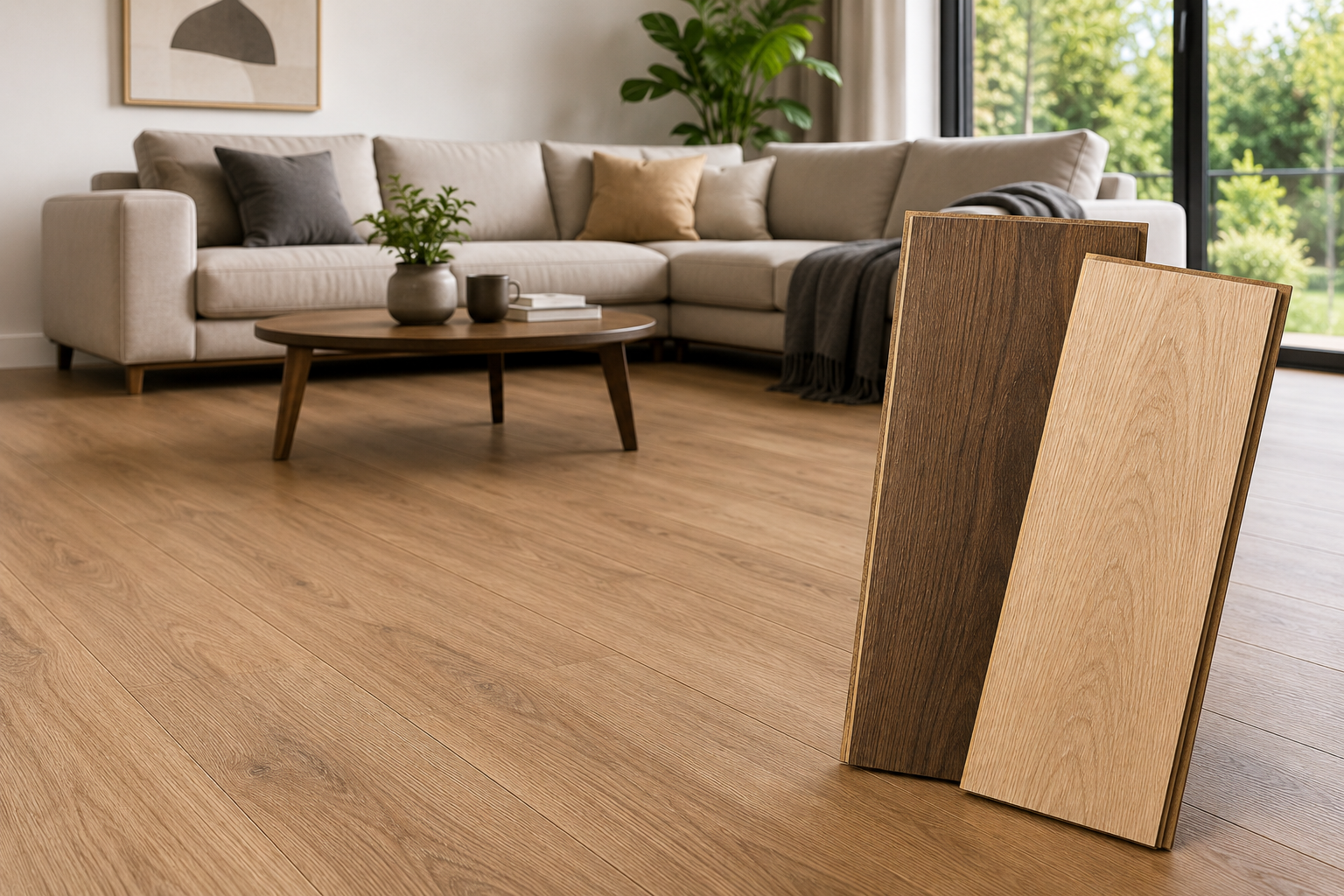
For lounges, bedrooms, passages and many other normal living areas, we believe a good-quality laminate floor is often the better long-term choice. A strong laminate surface is hard, wear-resistant and generally offers excellent resistance to everyday scuffing and scratching. It also has the more natural feel of a wood-based product rather than a plastic-based surface.
Many quality laminate floors carry an AC4 abrasion rating. That is a useful indication that the surface is designed for demanding residential use and some commercial use. It should not, however, be treated as a complete quality score. The density of the core, strength of the locking system, water protection, overall construction, installation and warranty are just as important. Vinyl uses different measures, including wear-layer thickness and usage classifications, so an AC rating should not be compared directly with a vinyl wear-layer figure.
Price also matters. When we compare products of a similar visual standard, laminate frequently gives the customer a harder-wearing surface and a convincing timber appearance at a very competitive price. That is the main reason we often see it as better overall value for ordinary living spaces.
Modern water-resistant laminate has changed the comparison
Laminate technology has improved significantly. Modern water-resistant ranges use tighter locking systems, protected edges and installation details designed to handle accidental surface water for a stated period. Depending on the exact range, that period may be 24, 48 or 72 hours.
This does not make every laminate floor waterproof, and it does not turn a laminate installation into protection against a flood, leaking appliance, plumbing failure or moisture rising from the slab. Customers must select a water-resistant range, follow the specified sealing and accessory requirements, and stay within that product's warranty conditions. Spills should still be cleaned up as soon as possible.
How we would choose between the two
• For lounges, bedrooms and passages: we would usually start by looking at a good-quality laminate floor for its hard surface, natural feel and value.
• Where spills are a frequent concern: a suitable SPC vinyl or a specifically rated water-resistant laminate may both be considered, but the warranty and installation details matter more than the marketing label.
• Where the subfloor is uneven: do not choose the floor first and hope the underlay will solve the problem. Assess and correct the base before installing either system.
• In rooms with strong direct sun: check the product's temperature and sunlight limits, provide shading where necessary, and make sure the floating floor can move correctly.
• For homes with pets or heavy furniture: compare the actual surface warranty and product specification, and use mats, felt pads and protective cups. No floating floor is completely scratch-proof or damage-proof.
Questions worth asking before you buy
• What exactly is the product? Confirm whether it is SPC click vinyl, another rigid-core vinyl, glue-down vinyl or laminate, because the products are not interchangeable.
• What does the subfloor specification require? Ask for the permitted flatness tolerance, moisture limits, vapour-barrier requirements and the preparation included in the quotation.
• What does 'waterproof' or 'water-resistant' actually cover? Check whether the warranty applies to everyday surface spills, standing water, the locking joints, water below the floor, flooding or appliance and plumbing leaks.
• Are there heat or sunlight restrictions? Large windows, sliding doors and unshaded afternoon sun should be discussed before the product is selected.
• What happens if there is a valid claim? Establish whether the warranty covers only replacement boards or also inspection, upliftment, labour, skirtings and reinstallation.
Our conclusion
Vinyl click flooring is not automatically a poor choice, and laminate is not automatically the right choice for every room. The most expensive problems usually occur when a product is sold on one attractive feature without enough attention to the subfloor, moisture, heat, room use and installation requirements.
After more than 20 years in the flooring industry, our practical view is that a good-quality laminate floor remains an excellent option for most living areas. It offers a strong, hard-wearing surface, a natural wood-based feel and, in many cases, better value for money. Modern water-resistant laminate has made that choice even stronger, provided the correct product is used and its limitations are respected.
At Visto Mouldings, our aim is not simply to sell the floor with the strongest marketing claim. We want to help customers choose a product that suits the room, the base and the way their household lives, so that the finished floor performs properly for years to come.
Need help choosing? Speak to
Visto Mouldings for practical advice on laminate flooring, vinyl click flooring, subfloor preparation and professional installation.