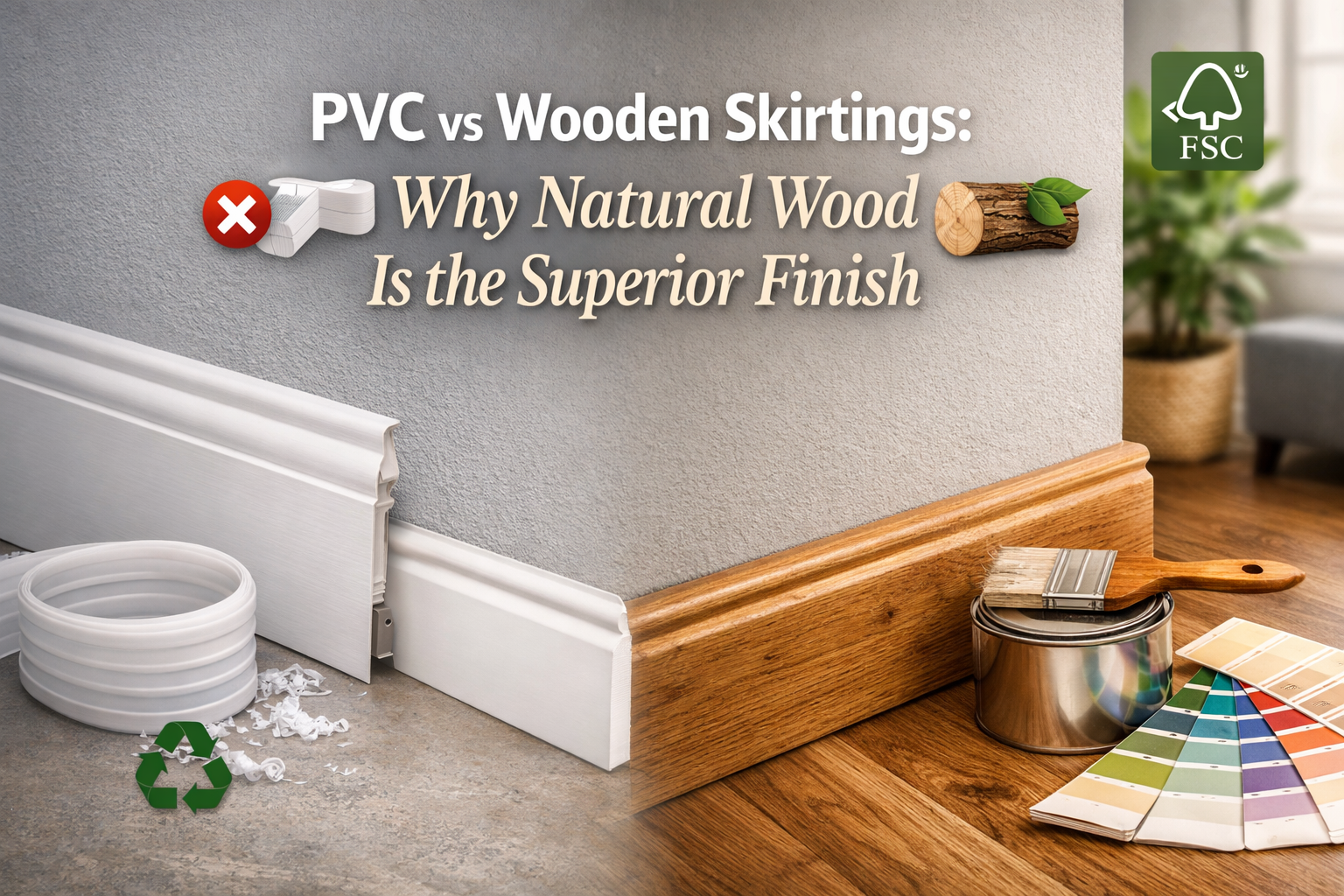
When it comes to finishing off a room, skirtings play a far bigger role than many people realise. They create the visual transition between your walls and floors and have a major impact on how polished and complete a space feels. While PVC skirtings are often seen as a quick solution, wooden skirtings consistently deliver a superior, more refined result 🪵✨.
🌍 Environmental Impact: Wood vs PVC
One of the biggest drawbacks of PVC skirtings is their environmental impact ❌. PVC is a plastic-based product that is not biodegradable and contributes to long-term environmental pollution.
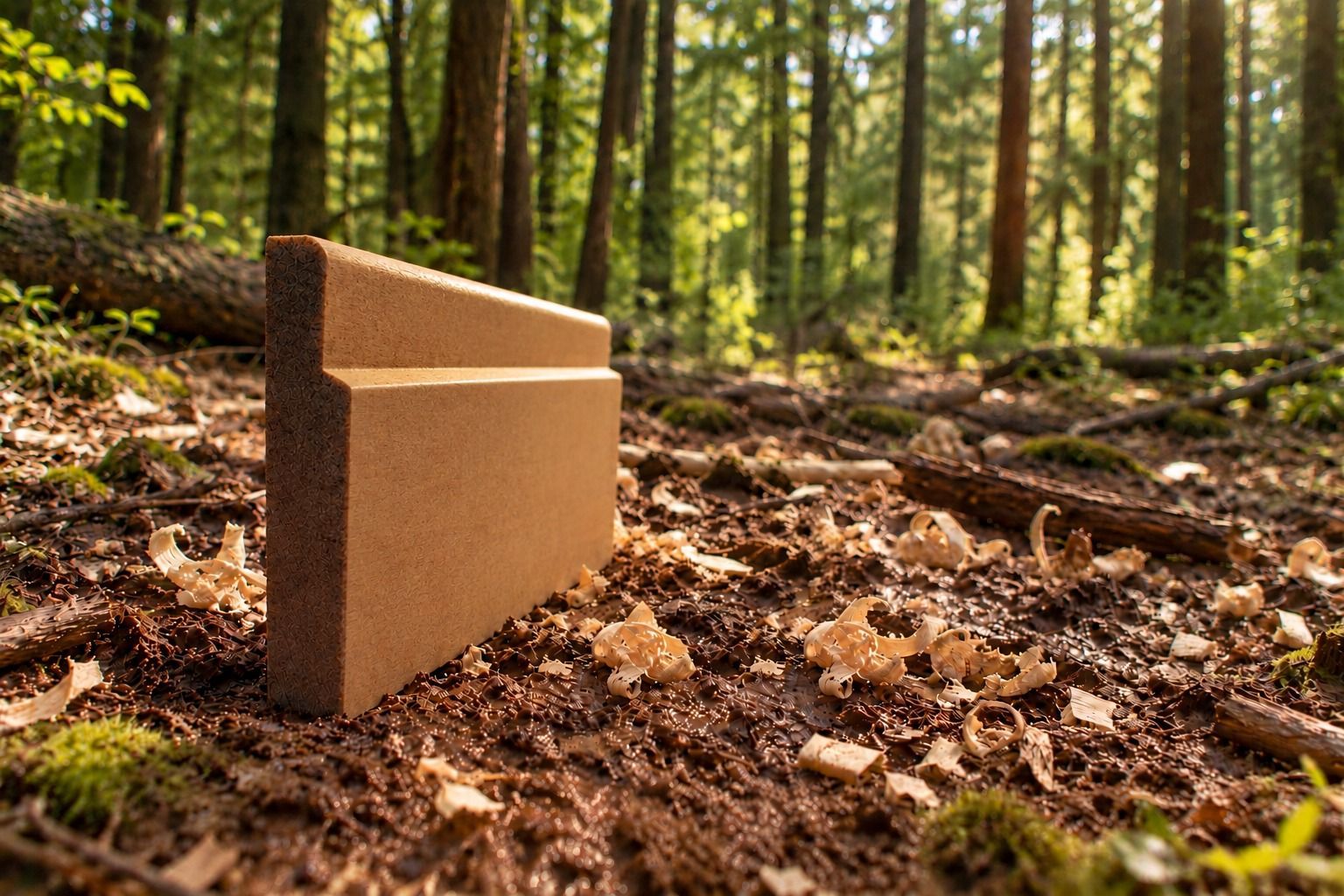
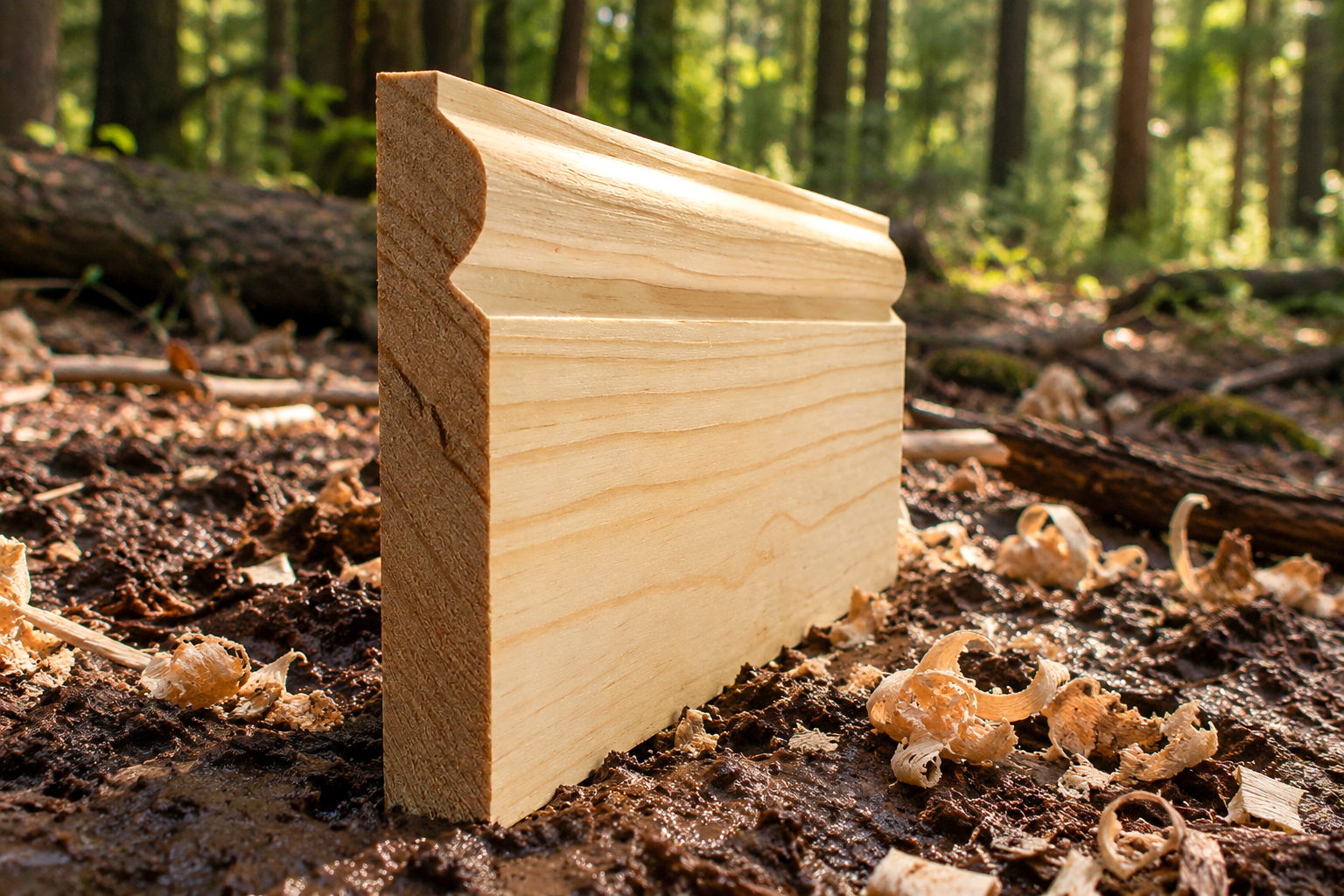
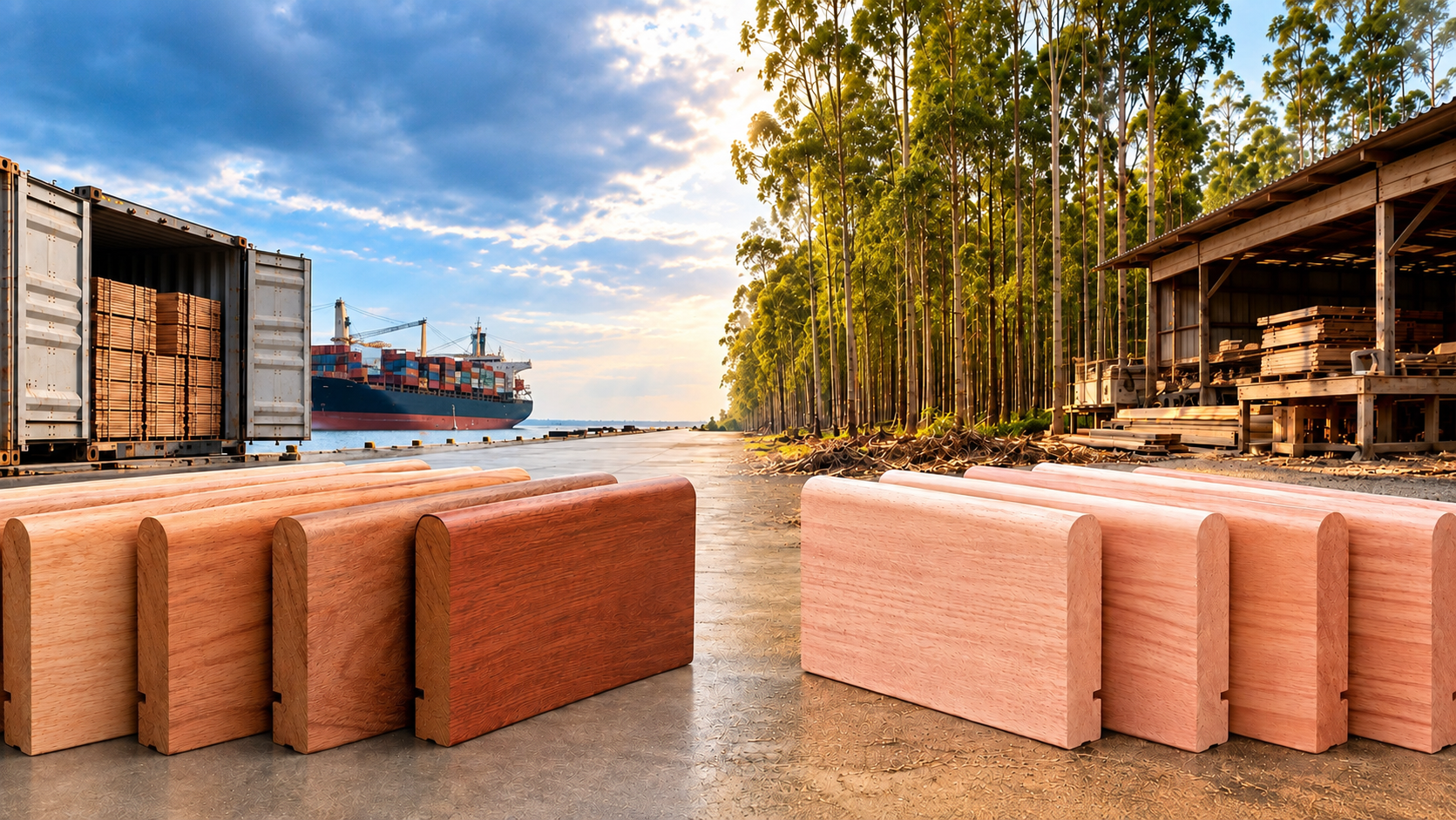
In contrast, quality wooden skirtings are made from FSC-certified timber 🌱, meaning the wood is sourced from responsibly managed forests. This makes wooden skirtings a far more sustainable and eco-conscious choice for homeowners who care about the environment.
Why wood wins environmentally:
- FSC-certified and sustainably sourced 🌱
- Renewable material ♻️
- Lower long-term environmental impact
🎨 Design Flexibility & Customisation
Wooden skirtings offer unmatched flexibility when it comes to design and personal style. They can be:
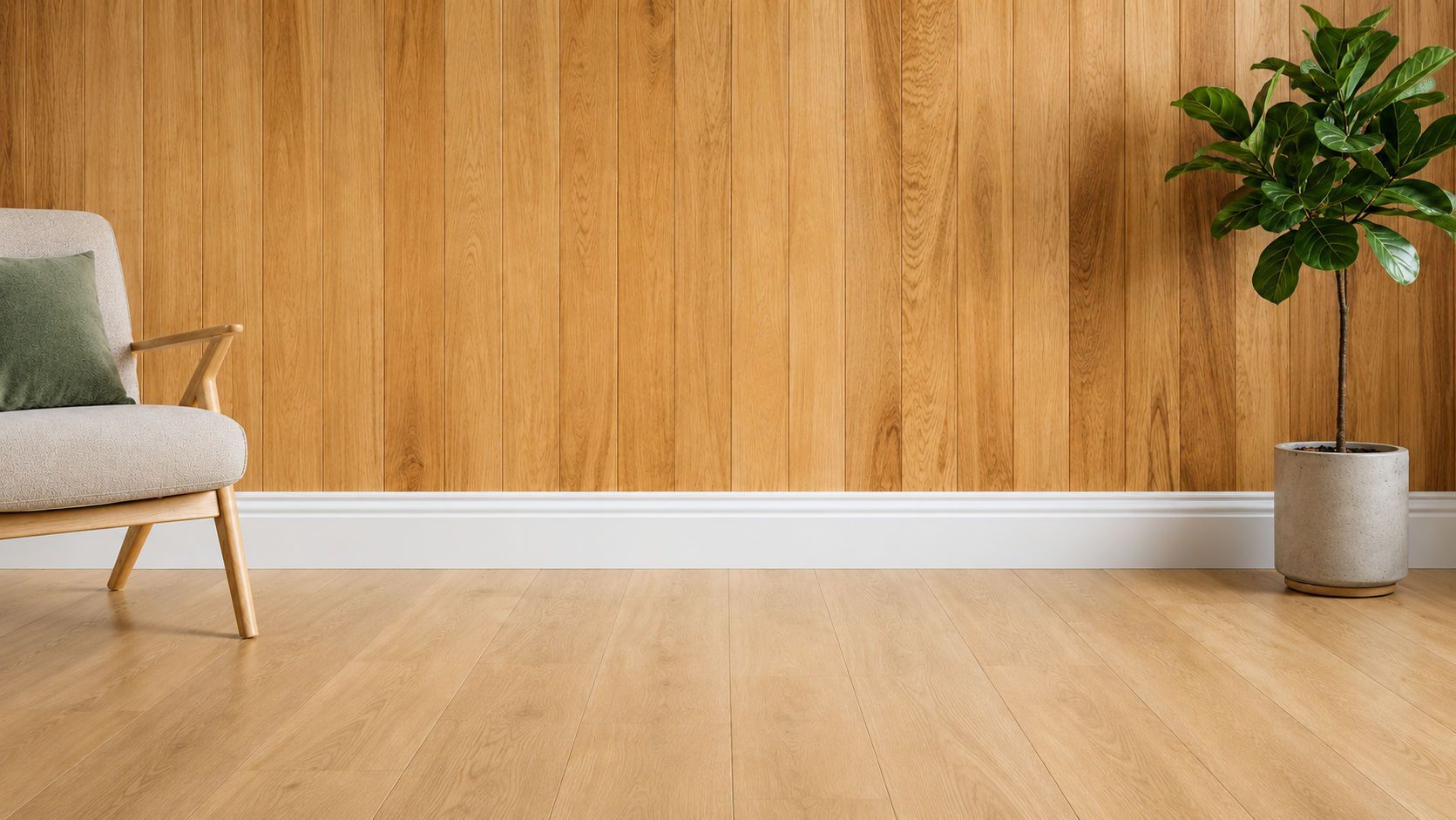
- Painted to match your walls for a subtle, seamless look 🎨
- Stained to highlight the natural grain of the wood 🪵
- Repainted over time as your décor changes 🔁
PVC skirtings, on the other hand, are limited in appearance. Their plastic finish often looks artificial on walls 👀 and does not absorb paint as naturally or evenly as wood.
✨ A Seamless, Premium Finish
A major advantage of wooden skirtings is the seamless finish they provide after installation ✨. Wood can be precisely cut, joined, filled, and painted, resulting in smooth transitions and invisible joins.
PVC skirtings often show visible joins and corners 🔧, which can detract from the overall look of a space. Over time, these joins may become more noticeable, especially as materials expand and contract.
🏡 Aesthetic Appeal & Long-Term Value
Wooden skirtings add warmth, character, and a premium feel to any interior 🏡. They complement both modern and traditional spaces and enhance the overall value of a home.
PVC skirtings may seem cost-effective initially, but their appearance and durability often fall short in the long run ❌. Wooden skirtings, when properly installed and maintained, can last for decades, making them a smarter long-term investment.
🛠️ Durability & Maintenance
While PVC is often marketed as “maintenance-free,” wooden skirtings are surprisingly durable when properly sealed and painted ✔️. Scratches or marks on wood can be:
- Sanded
- Repaired
- Repainted
PVC skirtings, once damaged, are far more difficult to repair neatly and often require full replacement.
🌱 The Smarter, More Sustainable Choice
Choosing wooden skirtings over PVC is about more than just appearance. It’s about:
- Making an environmentally responsible decision 🌍
- Achieving a seamless, high-end finish ✨
- Enjoying long-term flexibility and durability 🪵
For homeowners and designers who value quality, sustainability, and timeless style, natural wooden skirtings remain the superior finish.